
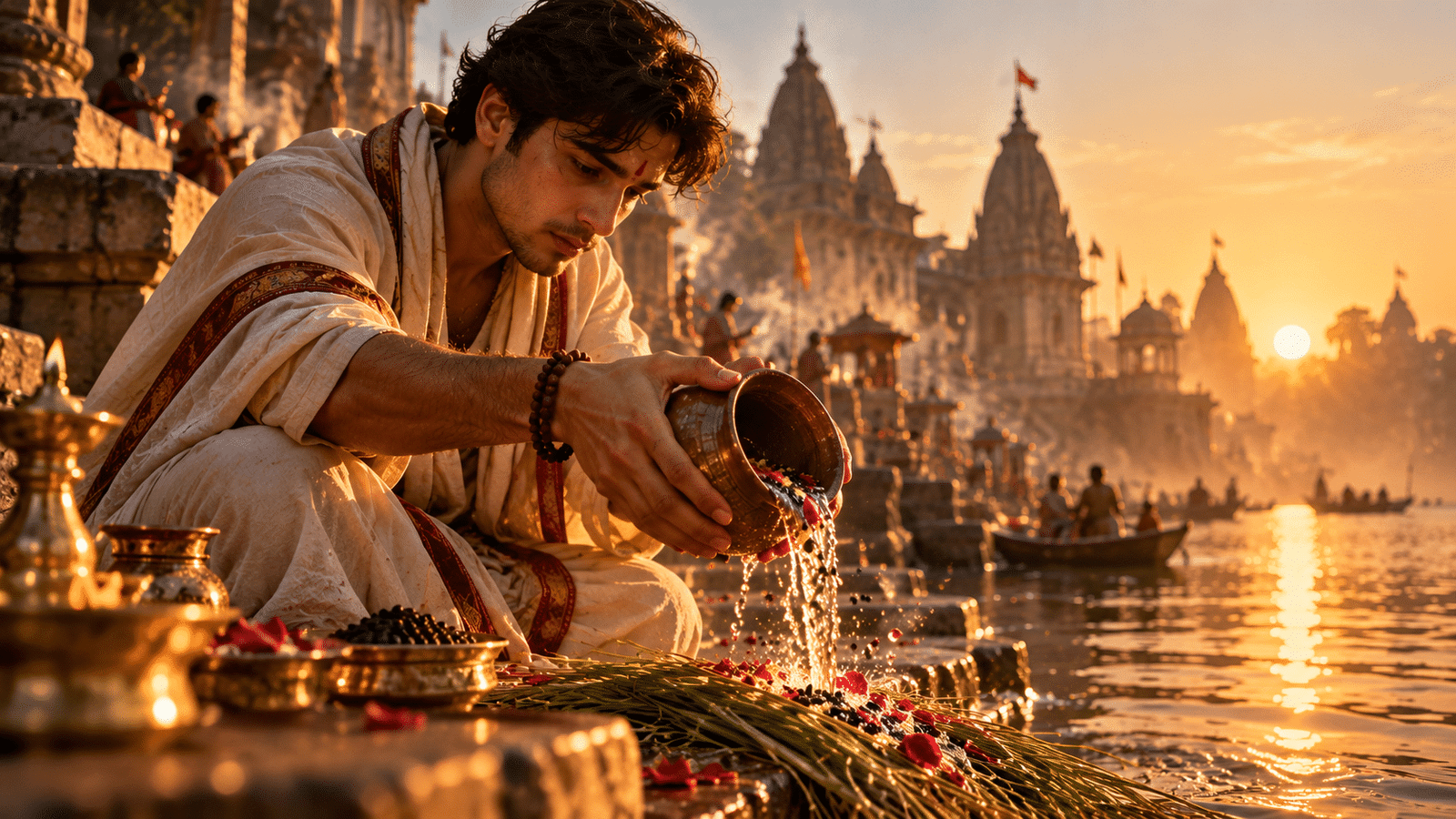
Every year during the fortnight of Bhadrapada (or Ashvin), millions of people around the world set aside daily ambitions to observe Pitru Paksha. While modern observers often view this 16-day period through a purely religious lens, a deeper look reveals a profound framework built on cosmic philosophy, psychological grounding, and a reverence for generational debt (Pitru Rina).
1. The Philosophy: Understanding Pitru Rina
At the core of Vedic philosophy lies the concept of the Three Debts (Tri-Rina), which every human being inherits at birth:
- Deva Rina: Debt to the forces of nature and the cosmos.
- Rishi Rina: Debt to the sages, gurus, and teachers who passed down knowledge.
- Pitru Rina: Debt to one’s ancestors, who provided physical life, lineage, and cultural continuity.
Pitru Paksha is not driven by fear or grief; it is driven by gratitude. The tradition recognizes that our existence, physical constitution, inherited wisdom, and societal foundation are all gifts from those who came before us. By offering Shraddha (a word derived from Shraddha, meaning “faith” or “devotion”), one acknowledges that life is part of an unbroken chain across centuries.
2. The Science of the Rituals: Sound, Material, and Direction
The traditional offerings during Pitru Paksha—most notably Tarpan and Pind Daan—follow symbolic and environmental practices handed down over millennia:
- The Use of Kusha Grass and Water: During Tarpan, water mixed with black sesame seeds and milk is poured through Kusha grass worn on the ring finger. In ancient ritual science, Kusha grass (Desmostachya bipinnata) was considered a bio-electric insulator, grounding bodily energy during intense mental focus and mantra recitation.
- Sesame Seeds (Tila): Black sesame seeds symbolize longevity, preservation, and subatomic purity. In Vedic symbolism, they represent the subtle body (Sukshma Sharira) and serve as a tool for energetic transfer.
- Sound Frequencies (Mantras): Mantras recited during Shraddha are composed with specific sound vibrations intended to cultivate focused mental concentration, quiet the subconscious mind, and send coherent mental energy toward loved ones who have passed.
- Facing South: Rituals for ancestors are consistently performed facing South. In traditional Hindu cosmology (Vastu), the Southern realm (Yama Loka) represents the direction of departure, alignment with magnetic poles, and ancestral realms.
3. Panchabali: The Eco-Centric Connection
A central part of the Shraddha ritual is Panchabali—the offering of portions of food to five specific entities before eating:
- Gau (Cow): Representing the earth and nourishment.
- Kukkur (Dog): Representing vigilance and protection.
- Kaka (Crow): Symbolizing the bridge between physical and subtle worlds.
- Devta (Nature/Deities): Honoring environmental forces.
- Pipilika (Ants/Insects): Acknowledging the smallest forms of life in the ecosystem.
This practice reflects an ecological principle: human reflection must remain tied to universal responsibility. By feeding animals and microorganisms first, the tradition teaches humility and ecological balance.
4. Modern Relevance: Genetic Legacy and Mental Grounding
In a fast-paced world focused on individuality and modern achievements, Pitru Paksha offers important psychological benefits:
- Epigenetics and Ancestral Honor: Modern science acknowledges that we carry not just physical DNA, but also inherited behavioral traits and cellular memories. Expressing gratitude to ancestors aligns closely with acknowledging our genetic heritage.
- Slowing Down and Reflection: The temporary pause on purchasing luxury goods or launching new commercial ventures allows individuals to quiet the spirit, reflect on mortality, and focus on inner reflection rather than outward consumption.
- Healing Generational Grief: Taking time out each year to remember departed parents, grandparents, and forgotten relatives helps process grief, maintain family history, and give younger generations a sense of identity and roots.
Summary
Pitru Paksha is far more than an ancient superstition; it is a ritual designed to cultivate emotional stability, honor natural ecosystems, and express gratitude for our heritage. By recognizing that we are simply custodian links between past generations and future descendants, Pitru Paksha helps keep human pride in check and roots us in lasting gratitude.