
Introduction
India is a land of festivals where spirituality and culture blend beautifully to keep the ancient traditions alive. One such Hindu festival is Ganga Dussehra celebrated with full devotion and enthusiasm. This holy occasion is dedicated to the holy River Ganga and it is the divine descent of Goddess Ganga from heaven to earth.
Ganga Dussehra is mainly celebrated in Northern India, especially in places like Haridwar, Varanasi, Prayagraj and Rishikesh. It is linked to purity, salvation and spiritual cleansing.
The festival is celebrated on the Dashami Tithi (tenth day) of the bright fortnight of the Hindu month of Jyeshtha, usually in May or June. People gather on the river banks, take holy dips, offer prayers, give charity and seek blessings for purification of sins and spiritual uplift.
In Hinduism, the River Ganga is not just a river. It is a divine mother, worshipped as Goddess Ganga. She is said to wash away sins and grant liberation from the cycle of birth and death. That is why Ganga Dussehra is a day of huge religious significance for millions of devotees.
The Story of Ganga Dussehra
Ganga Dussehra story is quite based on Hindu mythologies. As per the ancient scriptures, King Sagara performed Ashwamedha Yajna. But then, as it turned out unexpectedly, Sage Kapila reduced his sixty thousand sons to ashes.
Many generations later, King Bhagiratha, a descendant of King Sagara, performed severe penance to seek salvation for his ancestors. Lord Brahma, pleased with his devotion, agreed to send the celestial river Ganga to earth. But the terrific force of Ganga’s descent could have destroyed the earth.
With great mercy, Lord Shiva caught the mighty river in his matted locks (jata) and then gently released her to flow upon Earth to save her from destruction. Then the holy waters touched the ashes of king Bhagiratha’s ancestors and they were released to heaven.
This divine event is celebrated as Ganga Dussehra which means divine grace, perseverance, devotion and redemption.
Ganga Dussehra: The Spiritual Importance
Ganga Dussehra, the word “Dussehra” is derived from the Sanskrit words “Dasha” (ten) and “Hara” (destroyer) which means destroyer of ten sins. It is believed that by observing rituals on this holy day devotees purify themselves of ten kinds of sins committed through thoughts, words and deeds.
As per Hindu tradition, bathing in the holy River Ganga at this time purifies a person spiritually and brings divine blessings. Those who cannot go to the river, pray to Goddess Ganga at home and sprinkle Ganga Jal (holy water) for spiritual cleansing.
Devotees often fast, recite mantras and give charity, seeking peace, prosperity and freedom from bad karma.
Ganga Dussehra Rituals and Customs
1. Holy Bath In Ganga River
Taking a holy dip in River Ganga is a major ritual of Ganga Dussehra. Pilgrims throng to holy cities like Haridwar, Varanasi, Prayagraj and Rishikesh to bathe in the river.
On this day devotees believe that a dip in the holy waters will wash sins away and purify the soul.
2. Worship of Goddess Ganga
Devotees offer flowers, incense sticks, diyas, milk, fruits and sweets to Goddess Ganga. Devotional songs and hymns to Mother Ganga are sung in temples and homes.
Thousands of devotees flock to witness the spiritually uplifting atmosphere during the special Ganga Aarti ceremonies.
3. Charitable Gifts and Donations
On the occasion of Ganga Dussehra, it is very auspicious to donate food, clothes, water, grains and essential items to the poor. The festival is in midsummer, so it’s considered a good deed to hand out water and snacks.
4. Chanting Mantras
Goddess Ganga and Lord Shiva have many sacred Mantras which are recited by devotees. Prayers are believed to be a source of positivity, inner peace and divine blessings.
5. Diyas in Water
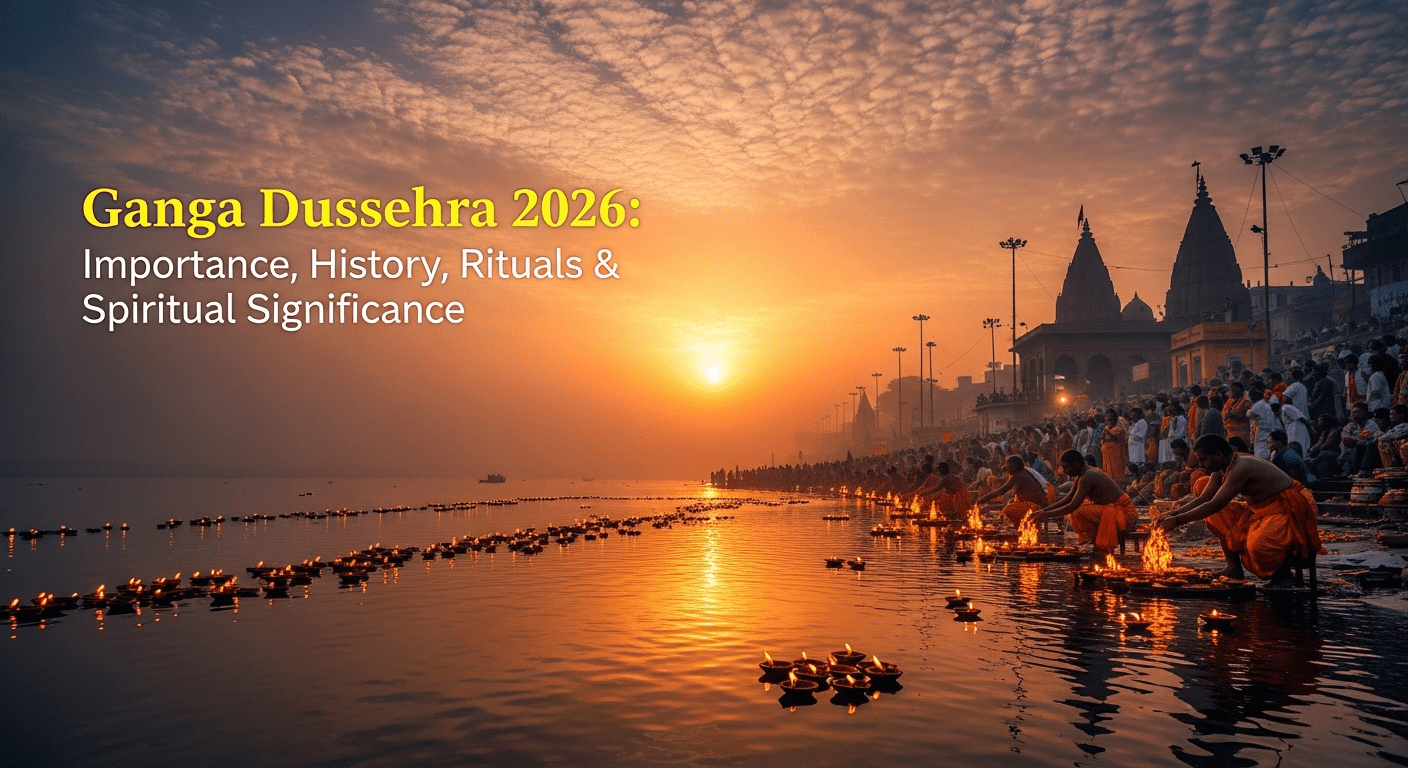
Devotees float oil lamps on the rivers in several places as a mark of their gratitude and devotion. The diyas floating in the river create a very spiritual ambience.
Ganga Dussehra Celebrations in India
Haridwar
Thousands of pilgrims flock to Har Ki Pauri in Haridwar for grand Ganga Aarti ceremonies and holy dips. Devotional chants and religious processions fill the air.
Varanasi
People throng to the ghats of Varanasi to perform rituals and get blessings from Goddess Ganga. Throughout the day priests perform various kinds of pujas.
Prayagraj
Prayagraj where the holy rivers meet, witnesses large scale religious activities during Ganga Dussehra. Bathing here, the devotees believe, adds to spiritual credit.
Rishikesh
Rishikesh is famous for spirituality and yoga and during the festival the city witnesses devotional events, meditation sessions and grand river worship ceremonies.
Environmental Importance of Ganga Dussehra
Apart from spirituality, Ganga Dussehra also serves as a reminder to protect rivers and preserve nature. The River Ganga is vital to India’s cultural and economic fabric and sustains the livelihoods of millions.
In recent years, the environmental awareness campaigns associated with Ganga Dussehra have made an appeal to the people to keep the river clean and check pollution. Religious and social organizations advocate green celebrations and sustainable practices.
This festival is a reminder that devotion towards Mother Ganga should also be accompanied with responsibility towards environment conservation.
Significance of Ganga in Hindu Culture
The river Ganga holds a special place in the Hindu tradition. The river is described in sacred texts like Rigveda, Mahabharata, Ramayana and Puranas and represents purity, motherhood, forgiveness and salvation.
From birth ceremonies to funeral rituals, Ganga water is held to be of the highest religious nature by Hindu households. It is believed that even a few drops of Ganga Jal can purify the environment and spiritually energize the devotees.
Saints, sages and seekers have meditated on its banks for centuries and the Ganga has become a symbol of spiritual awakening and enlightenment.
Ganga Dussehra: Lessons
Ganga Dussehra gives us some good lessons which are relevant in today’s times:
- Devotion and determination: The story of King Bhagiratha’s determination is a reminder of the power of sincere effort.
- Clean mind and soul: Launch into your spiritual clean with positive thoughts and deeds.
- Environmental responsibility: Rivers protection is a moral and social obligation.
- Compassion and charity: Helping others helps social harmony and spiritual growth.
The festival inspires the people to follow purity, gratitude and selflessness.
Conclusion
Ganga Dussehra is not just a religious observance but a celebration of faith, purity and divine blessings. It celebrates the Goddess Ganga’s descent to earth and continues to inspire millions with its message of spiritual cleansing and devotion.
Devotees seek divine blessings and inner peace on this holy occasion whether it is holy bathing, praying, charity or contemplation. The festival urges society to worship and protect the sacred rivers which are the sources of life.
Ganga Dussehra is an occasion to remind mankind of the eternal association of spirituality, nature and faith as devotees gather on the banks of the river and chant prayers to mother Ganga.