
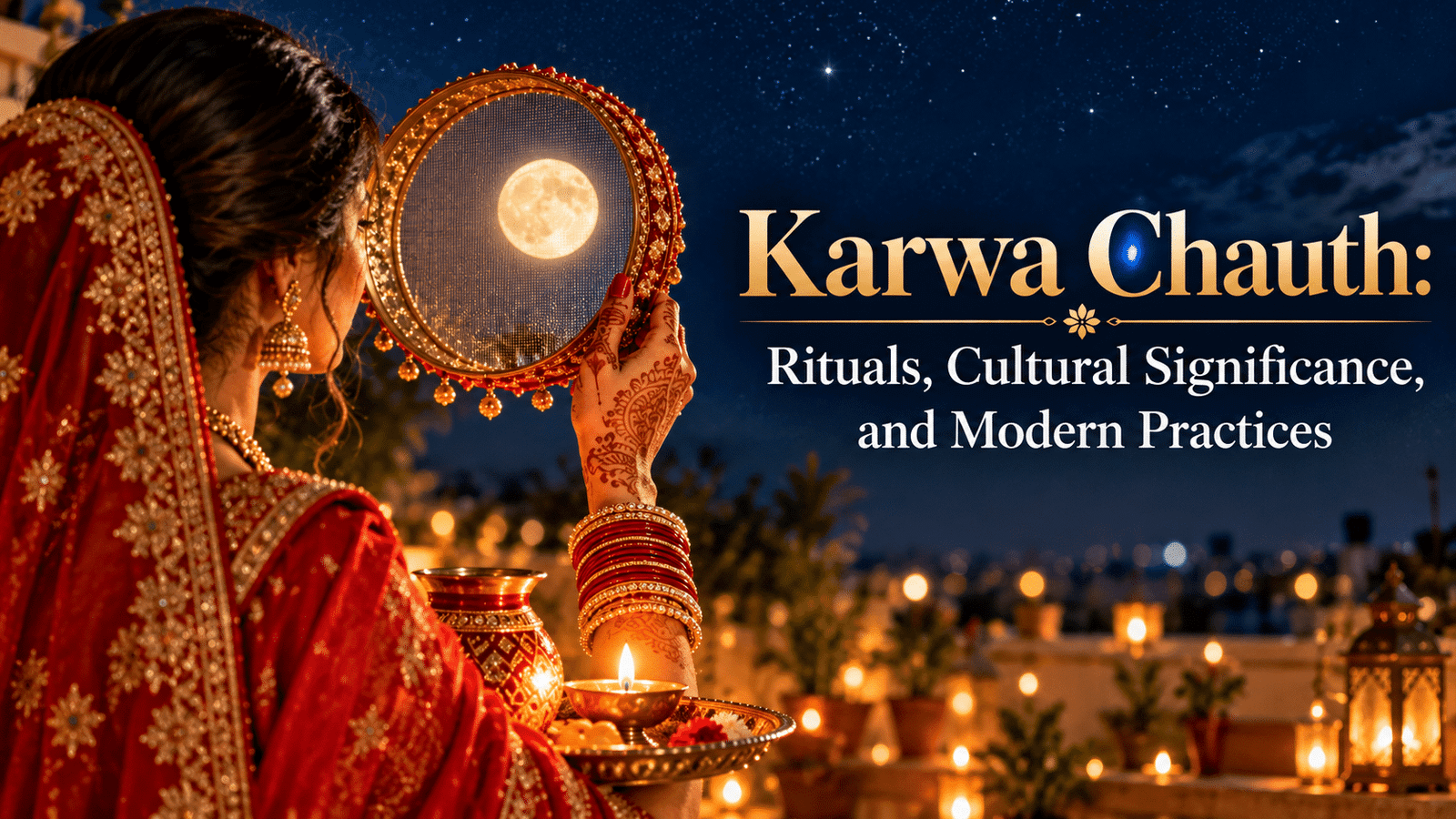
The night sky lights up with quiet anticipation every autumn as millions of eyes scan the horizon for a single glimpse of the silver moon. Karwa Chauth stands as one of the most vibrant, emotionally resonant, and visually striking festivals in Indian culture. Observed on the fourth day after the full moon (Krishna Paksha Chaturthi) in the Hindu month of Kartik, this festival transcends a simple daily routine. It is a profound spiritual pledge, a celebration of marital harmony, and a living bridge connecting age-old customs with contemporary expressions of partnership.
Cultural Significance
The roots of Karwa Chauth run deep into Indian folklore and Vedic philosophy. The term itself is derived from two words: Karwa, referring to a small earthen pot with a spout, and Chauth, meaning the fourth day. The earthen pot symbolizes abundance, fertility, and the earth element, while its spout represents the continuous, flowing stream of life and prosperity.
Central to the festival is the legendary story of Queen Veeravati. According to tradition, Veeravati observed a strict fast for her husband’s long life at her parents’ house. Unable to see her suffer from extreme thirst and hunger, her seven loving brothers tricked her into believing the moon had risen by creating an illusion of light behind a tree. Tricked into breaking her fast prematurely, Veeravati received word that her husband, the King, had suddenly fallen gravely ill and died. Heartbroken, she undertook intense penance and devotional prayers toward Goddess Parvati. Moved by her devotion, the Goddess revealed the trickery and instructed her to repeat the fast with complete faith, ultimately restoring her husband to life.
This tale, along with legends like Savitri retrieving her husband Satyavan from the god of death, underscores the core philosophy of Karwa Chauth: devotion paired with endurance has the power to overcome adversity. The festival invokes the divine blessings of Lord Shiva, Goddess Parvati, Lord Ganesha, and Kartikeya over the family.
The Sacred Day: From Pre-Dawn to Moonrise
The observance of Karwa Chauth follows a structured series of traditional steps throughout the day, balancing physical endurance with festive camaraderie.
1. Sargi (Pre-Dawn Energy Meal)
The day begins long before the first rays of sunlight. The mother-in-law lovingly prepares and gifts a special pre-dawn hamper called Sargi to her daughter-in-law. This meal is a blend of affection and practical nourishment, containing fresh fruits, dry fruits, traditional sweets, and wholesome grains designed to sustain the fasting woman through an intense day without food or water.
2. The Nirjala Fast and Solah Shringar
As dawn breaks, the strict Nirjala fast begins. Abstaining from both food and liquids for the entire day, fasting women abstain from household chores and dedicate these hours to mental discipline, relaxation, and togetherness. Intricate henna (Mehndi) designs grace their hands, and women adorn themselves in Solah Shringar—sixteen traditional bridal embellishments including vibrant red or gold attire, glass bangles, vermilion (Sindoor), and jewelry representing marital bliss (Sowbhagya).
3. Puja and Thali Batan
In the late afternoon, women gather in community groups for the collective Puja. They sit in a circle around an altar featuring an image of Gaura Maa (Goddess Parvati). While listening to the recitation of the Karwa Chauth Vrat Katha, they pass decorated worship platters (Thalis) in a clockwise direction—a ceremony called Thali Batan—while singing devotional folk songs.
4. Moon Viewing and Breaking the Fast
The climax of the day arrives with the moonrise. Women gather on rooftops carrying a decorated platter containing an oil lamp (Diya), water, sweets, and a traditional sieve (Chhani). Through the mesh of the sieve, they first gaze at the moon, offering water (Arghya) and prayers to the moon deity (Chandra Dev) for peace and health. They then look at their spouse through the same sieve, seeking blessings for long life and shared happiness. The husband breaks his wife’s fast by offering her her first sip of water and a sweet morsel, marking a moment of pure gratitude and companionship.
Modern Adaptations and Evolving Practices
While rooted in centuries-old traditions, Karwa Chauth has adapted beautifully to contemporary lifestyles:
- Equal Partnership and Mutual Fasting: Karwa Chauth is no longer viewed strictly as a one-sided obligation. Today, many husbands choose to observe the fast alongside their wives as a gesture of equal partnership, mutual respect, and shared devotion.
- Health and Wellness Focus: Modern households prioritize health-conscious Sargi meals, incorporating complex carbohydrates, hydration-focused foods, and nuts to ensure physical well-being during the fast.
- Global Community Connection: Diaspora communities across North America, Europe, and Asia organize virtual group Pujas and digital moon-sighting groups, keeping traditional roots alive across international borders.
Summary
Karwa Chauth remains a powerful testament to love, patience, and commitment within Indian culture. Whether viewed through the lens of ancient spiritual symbolism or modern partnership, it stands as a timeless celebration of trust, emotional warmth, and the strength of lifelong family bonds.