
If you’re following the Jain calendar, Mahavir Jayanti 2026 is the one date you circle in red. It’s not just another festival; it’s the day the Jain community marks the birth of Lord Mahavira, the 24th and last Tirthankara. For many Jains, this isn’t about noise and fireworks; it’s about quiet reflection, temple‑going, and a renewed sense of ahimsa (non‑violence) that quietly shapes the way they live the rest of the year.
In 2026, the preparations around Mahavir Jayanti are feeling a bit more structured. People are thinking ahead about fasting, temple visits, charity, and even how to explain the festival’s meaning to younger family members. Instead of rushing last‑minute, families are asking: “What should I do before the day so everything feels meaningful?”
What Mahavir Jayanti 2026 Actually Means
At its core, Mahavir Jayanti is a birth anniversary celebration, but it’s loaded with philosophical weight. Lord Mahavira is seen as the one who revived and reshaped Jainism in a very structured, ethical way. His teachings fit into three big buckets:
- Ahimsa (non‑violence) – not just physically, but also in speech and thought.
- Satya (truthfulness) – cutting back on exaggeration, gossip, and half‑truths.
- Aparigraha (non‑possessiveness / simplicity) – reducing unnecessary accumulation and clutter.
When you prep for Mahavir Jayanti, you’re not just setting up a temple calendar; you’re also setting up a mini mental reset around these three ideas.
When Does Mahavir Jayanti Fall in 2026?
Mahavir Jayanti is usually celebrated on the 13th day of the bright half of the Chaitra month, which in the Gregorian calendar falls in March or early April. In 2026, the date sits in that window again, and most Jain communities will be aligning their calculations, temple programs, and family plans around it.
Because the exact date can shift slightly by region or tradition, many families double‑check the local Jain calendar or temple announcement a few days before. The important thing is to lock in the date early so fasting, travel, and charity can be planned without last‑minute stress.
How to Prepare Spiritually Before Mahavir Jayanti 2026
1. Start with a mini “ahimsa audit”
A few days before Mahavir Jayanti, many people do something they don’t usually do: they pause and scan their recent behavior through the lens of ahimsa. Common questions include:
- Has my language been harsh or impatient with family / colleagues?
- Am I arguing more online than usual?
- Have I been careless with small creatures (insects, animals) around the house?
This isn’t about guilt‑tripping yourself. It’s about noticing patterns so Mahavir Jayanti feels like a conscious reset, not a ritual on autopilot.
2. Clean up your speech and digital space
Mahavir Jayanti is as much about what you don’t say as what you do. In the days leading up to it, some Jains:
- Reduce or pause negative social‑media engagement (arguments, roasting, meme‑bullying).
- Avoid gossip or rumor‑sharing in WhatsApp groups.
- Try to speak more gently at home, even when mildly irritated.
It’s like a short “digital and emotional detox” timed around the festival.
3. Lighten your mental load (aparigraha)
Aparigraha isn’t only about physical possessions. It’s also about mental clutter. In the week before Mahavir Jayanti, some people:
- Declutter a small part of the house (clothes, books, old gadgets).
- Prune phone storage and unused apps.
- Write down and release a few emotional “grudges” or sticky thoughts.
The idea is simple: less baggage, more clarity on the day of Mahavir Jayanti.
Practical Preparations for the Day
1. Plan your fasting and eating
Fasting is central to Mahavir Jayanti for many, but the style varies a lot from family to family and from individual to individual. Common patterns:
- Full fast (nirjala‑style): no food, no water for the day. Usually for healthy adults.
- Phalahar‑style: only fruits, milk, nuts, and light sattvic items.
- Light vegetarian fast: simple meals, no non‑veg, no onion, no garlic.
What matters is planning ahead:
- Decide which style suits your health and routine.
- Inform immediate family so the kitchen can be adjusted.
- If you’re doing a strict fast, plan how to manage work, travel, or physical activity.
On the day itself, many people start the fast from sunrise and break it after the main puja or temple rituals. The breaking‑of‑fast meal is usually very simple: fruit, milk, or light khichdi.
2. Temple visit logistics
For many Jains, Mahavir Jayanti means temple time. In 2026, that’s easier to plan if you think ahead. Consider:
- Which temple? Local temple vs. a bigger Jain center.
- What time? Many temples have special morning programs, abhishek, and discourses.
- Crowd and commute: Check if there’s any known rush or special security / parking arrangement.
- What to carry:
- Simple flowers or fruits for offering.
- A small cloth or mat for sitting if the temple is crowded.
- A water bottle and light snacks in case you’re fasting lightly.
If you’re traveling from out of town, booking accommodation a few days early is common.
3. Charity and community prep
Mahavir Jayanti is also a day of giving back. Many families start thinking about:
- Food donations to poor families or shelters.
- Clothes or supplies to those in need.
- Support for Jain community projects (temple maintenance, animal shelters, education funds).
Some people decide a week before how much they want to donate and set aside the money so they don’t delay the act.
How to Prepare Your Home and Family
1. Home setup for Mahavir Jayanti
Even if you’re visiting a temple, many homes get a small dose of festival energy. Simple steps:
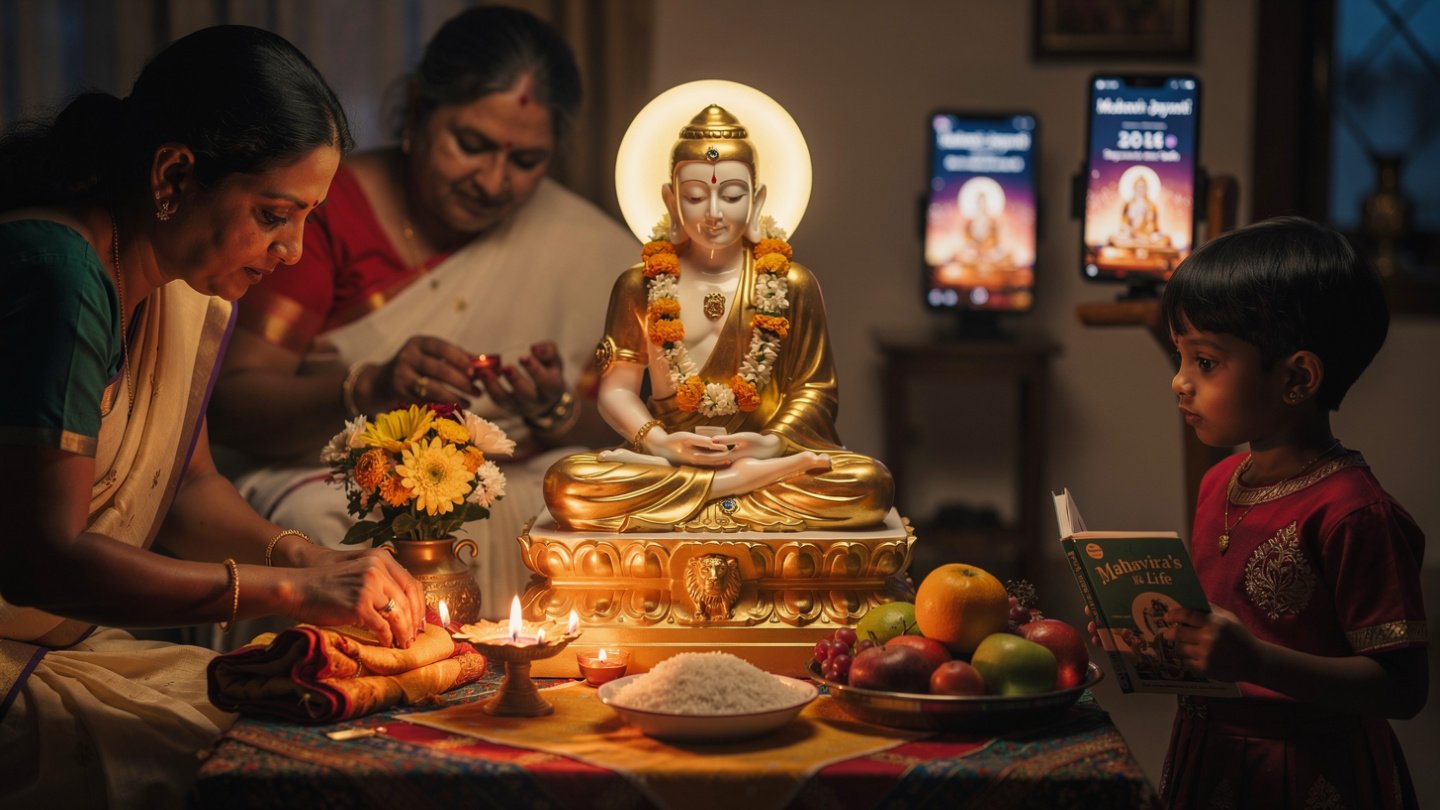
- Clean the puja area and arrange the idols or pictures of Lord Mahavira.
- Light a small lamp or diya in the morning.
- Place simple offerings like flowers, fruits, or a small bowl of rice and lentils.
You don’t need a full‑blown decoration. The emphasis is on cleanliness and calm, not showy aesthetics.
2. Explaining Mahavir Jayanti to kids
For younger family members, Mahavir Jayanti can feel abstract unless you break it down into stories and actions. A few ideas:
- Read or tell Lord Mahavira’s life story in simple language (his birth, his renunciation, his final teachings).
- Connect his life to things they already know:
- “Ahimsa” = not hurting animals or people, even by words.
- “Satya” = not lying or exaggerating.
- “Aparigraha” = not being greedy with toys or food.
- Let them participate:
- Help make a small donation.
- Help arrange flowers at home.
- Attend a short temple program if feasible.
When kids understand the why, the day feels less like a ritual and more like a family value‑day.
How to Prepare Mentally and Emotionally
1. Set a few small “Mahavir‑style” goals
Some people use the run‑up to Mahavir Jayanti to pick 2–3 concrete habits they want to improve. For example:
- Speak more patiently for one week.
- Reduce unnecessary shopping or impulse purchases.
- Avoid harsh words on social media or WhatsApp.
These aren’t vows carved in stone; they’re temporary experiments in non‑violence and simplicity timed around the festival.
2. Carve out quiet time
Mahavir Jayanti is not built for loud celebrations. In the days before, carving out a few quiet slots helps:
- Morning or evening short meditation or reflection.
- Reading a short passage about Lord Mahavira or Jain philosophy.
- Simply sitting in silence for 10–15 minutes, observing your breath and thoughts.
This kind of mental prep makes the actual festival day feel more grounded and less like a rushed to‑do list.
Common Questions People Have Before Mahavir Jayanti 2026
These are the kinds of questions that often come up in families and WhatsApp groups as the date approaches:
1. “Should I fast on Mahavir Jayanti?”
Many Jains do, but it’s not compulsory. The key is to choose a fasting style that matches your health and age. If you’re unsure, discussing it with a family elder or, if needed, a doctor is wise.
2. “How long should the fast be?”
Common patterns:
- From sunrise to sunset.
- From sunrise to after the main temple puja or abhishek.
- 24‑hour style (next‑day sunrise to next‑day sunrise) for more advanced practitioners.
The “right” length depends on your body, routine, and family tradition—not on social‑media bragging rights.
3. “Can I fast if I’m working full‑time?”
Yes, but you need to plan:
- Choose a light or phalahar fast if your job is physically or mentally demanding.
- Keep water handy if you’re not on a strict water‑free fast.
- Schedule any heavy work or meetings for the morning before the fast begins.
The idea is to honor your practice without turning it into a health experiment.
4. “What should I talk about with kids on Mahavir Jayanti?”
Simple themes work best:
- Non‑violence: How to avoid hurting others, even in small ways.
- Truthfulness: Not lying, not exaggerating, not spreading gossip.
- Simplicity: Not being greedy, sharing with others, not over‑shopping.
Using stories about Mahavira’s life as anchors makes it easier for kids to remember.