
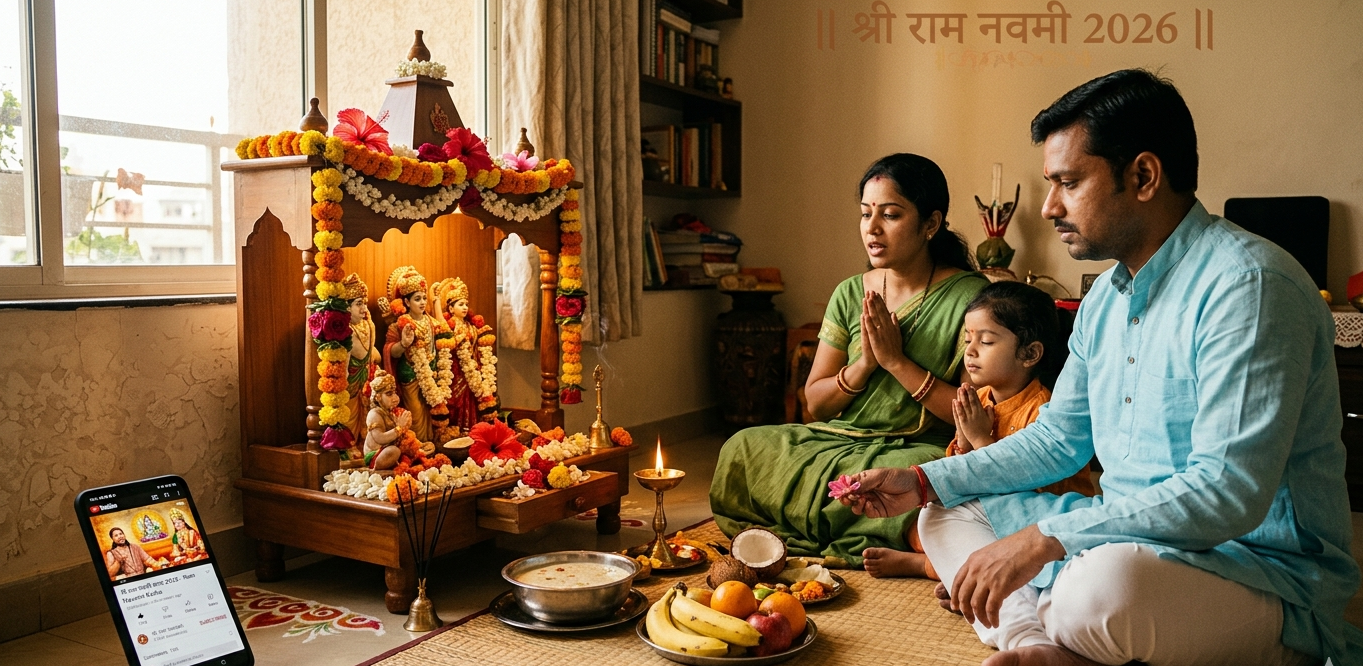
Ram Navami is one of the most widely celebrated Hindu festivals in India, marking the birth of Lord Shri Ram, the seventh avatar of Vishnu and the ideal king in the Ramayana tradition. In 2026, the festival falls on Thursday, March 26 for most of India, while Odisha and some other regions observe it on Friday, March 27, creating a small but noticeable date split in family calendars.
Below is a detailed, practical, and human‑style guide to Ram Navami 2026, covering dates, tithi, puja vidhi, fasting rules, and what to expect in mainstream and regional calendars.
What is Ram Navami?
Ram Navami celebrates the janma (birth) of Lord Ram, normally observed on the Navami tithi (ninth lunar day) of the bright half (Shukla Paksha) of the month Chaitra. For many devotees, it is not just a one‑day festival but a short spiritual arc that includes:timesofindia.
- A fast (vrat) from sunrise to sunset or longer.
- A Madhyahna puja around midday, when Lord Ram is believed to have been born.
- Listening to or reading the Ramayana or Ram Katha.
- Chanting simple mantras and bhajans at home or in temples.
It sits at the intersection of devotion, family ritual, and regional calendar logic, which is why the date confusion in 2026 keeps popping up online and in WhatsApp groups.
Ram Navami 2026 Date and Tithi
For 2026, the situation is clearer if you look at the tithi data rather than just the “date” label.smartpuja+2
When is Navami tithi?
- Navami tithi begins: 11:48 am on March 26, 2026
- Navami tithi ends: 10:06 am on March 27, 2026
This means the Navami energy technically spans both days.
Ram janm muhurat (birth time)
- Madhyahna (midday) window: 11:13 am – 1:41 pm on March 26, 2026
- Symbolic janm (birth) moment: 12:27 pm, IST, on March 26, 2026
Because this moment is within the Navami tithi window on March 26, most national‑level calendars and news sites treat March 26 as the main Ram Navami day.
Why Do Some People Celebrate Ram Navami on March 27?
Even though the tithi starts on the 26th, some regions, especially Odisha, mark Ram Navami on March 27.reddit+1
Regional calendar logic
- Local panchangs and temple‑centric communities often assign the full “day” label to the date when the Navami tithi is still active at sunrise.
- In Odisha, the traditional calendar system nudges the official festival day onto March 27, even though the tithi technically begins on the 26th and the janm moment is at 12:27 pm.
What this means for devotees
- Mainstream India: Celebrates March 26 as Ram Navami.
- Odisha‑style families: Follow March 27, often aligning with temple timings and local almanacs.
There is no single “wrong” date here; it’s more about which calendar system your family or temple follows.
Ram Navami 2026 Fasting (Vrat) Rules
Fasting on Ram Navami is common but not rigidly uniform. You’ll see three main patterns in 2026‑style guides.
Types of vrat
- Nirjala vrat
- No food, no water for the entire day.
- Usually followed by healthy adults who can manage it.
- Phalahar vrat
- Only fruits, milk, nuts, and sattvic items such as kheer.
- No grains, no onions, no garlic, no non‑vegetarian food.
- Light vegetarian vrat
- Simple meals without grains, onions, garlic, or non‑vegetarian food.
- Often adopted by people who cannot fast strictly but still want to observe the day.
When to start and break the fast
- Common structure (March 26 style):
- Start: Sunrise on March 26, 2026
- Puja window: 11:13 am – 1:41 pm
- Breakfast: After the main puja, usually in the afternoon or evening.
- Strict 24‑hour style:
- Start: Sunrise on March 26
- End: Sunrise on March 27 (eight prahar vrat)
- Odisha‑style (March 27)
- Start: Sunrise on March 27
- Puja: Around midday on March 27
- Breakfast: After the puja or by sunset
Health‑wise, modern guides often recommend tailoring the vrat to your age, health, and routine rather than forcing an extreme fast
Ram Navami Puja Vidhi (Step‑by‑Step)
You don’t need a pandit to perform a meaningful home puja. Here’s a simple, practical Ram Navami 2026 vidhi many families follow:
1. Setup (5–10 minutes)
- Clean a small area (table or altar).
- Place:
- Image or idol of Shri Ram, Sita, Lakshman, and Hanuman.
- Holy water, incense, diya, flowers, and a small bowl of phalahar items.
- Decide your time window: aim for the Madhyahna window (11:13 am – 1:41 pm) if possible.
2. During the puja
- Bathe and wear clean clothes.
- Light the diya and incense.
- Offer water, flowers, and akshata (rice + turmeric).
- Chant a simple Ram mantra such as:
- “Om Shri Ramaya Namah”
- Or repeat “Shri Ram, Shri Ram, Shri Ram” mentally or aloud.
- If you like, play or read a short Ram Katha or watch a Ram Navami 2026 katha video for family background.
3. After the puja
- Break the fast with your chosen sattvic meal (kheer, fruits, milk, simple dal‑rice if allowed by your vrat style).
- Distribute prasad (if any) to family, neighbours, or those joining the puja virtually.
This is ritual‑pragmatism, not perfectionism. The 2026 experience is as much about how you reconcile modern schedules with old rhythms as it is about the exact form of the puja.
Frequently Asked Questions (Ram Navami 2026)
These are based on real‑time queries and discussions around Ram Navami 2026.
1. Is Ram Navami 2026 on March 26 or March 27?
- Most of India: March 26, 2026 (Thursday).timesofindia.indiatimes+1
- Odisha and some regions: March 27, 2026 (Friday) as per local calendars.
2. Why are there two dates for Ram Navami 2026?
Because the Navami tithi starts at 11:48 am on March 26 and ends at 10:06 am on March 27, different calendar systems assign the “main day” label differently.
3. When should I start and break the fast in 2026?
- March 26 style (mainstream):
- Start: Sunrise on March 26.
- Break: After the Madhyahna puja (11:13 am – 1:41 pm) or by evening.smartpuja+1
- March 27 style (Odisha‑style):
- Start: Sunrise on March 27.
- Break: After puja or by sunset.
4. Can I do Ram Navami puja at home if I’m alone?
Yes. The key ingredients are a clean space, a simple image of Ram, a lamp, and a few mantras or bhajans. You can follow a short YouTube Ram Navami 2026 katha in the background if that feels comforting.
5. What should I eat after breaking the fast?
Traditional post‑fast foods include:
- Kheer, fruits, milk, nuts, and simple sattvic dishes (no onion, no garlic, no non‑vegetarian).